Clinical development leaders from Accenture, Novartis, Roche and Biorce discuss where AI agents can create real value in clinical development, and what needs to change before they scale.
Agentic AI is moving clinical development into a new phase, where the question is no longer whether the technology works but whether pharma, biotech and clinical technology teams can redesign the way work happens around it.
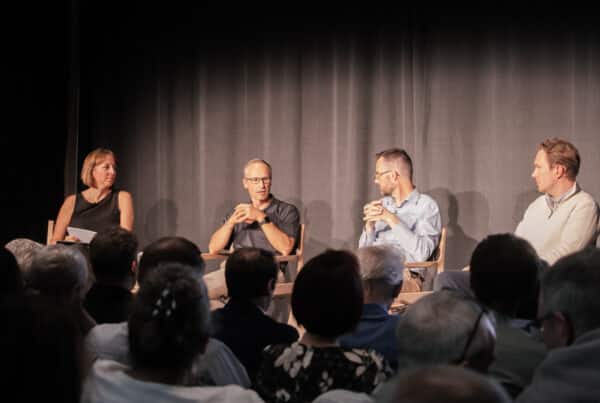
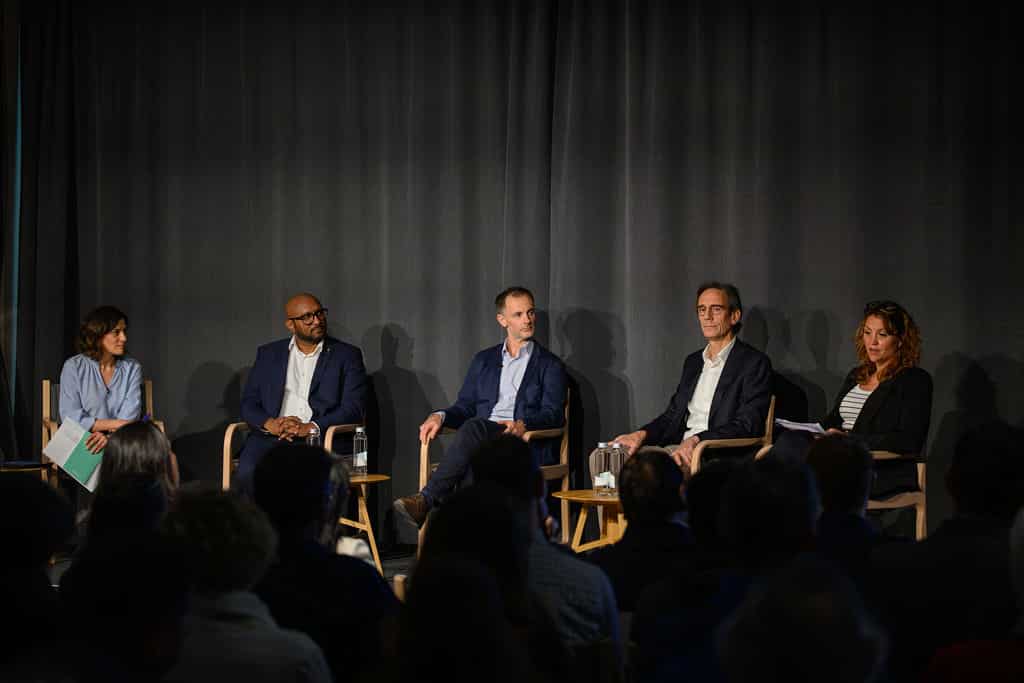
At a recent DayOne Open Mic event in Basel, a panel of clinical innovation leaders explored how AI agents could change clinical trials in practice. The discussion brought together Dr. Rohit Pushparajan, Managing Director, Lifesciences R&D Lead EMEA at Accenture; Robert McGregor, Executive Director, AI Program Head at Novartis Development; Luca Finelli, VP and Global Head, Digital Endpoints and Patient Centered Solutions at Roche Pharma Product Development; and Laetitia Soudanas, Senior Director Clinical Solutions at Biorce.
Their shared message was clear: Agentic AI will only deliver value when it helps clinical teams connect data, workflows, decisions and people across the trial lifecycle.
From automation to orchestration
Clinical trials are full of coordination work. Data must move between systems. Sites need to be selected and activated. Protocols, reports, queries and submissions need to be written, checked and updated. Vendors, sponsors, sites and internal teams all operate across different tools, formats and processes.
That is why orchestration came up repeatedly.
For Laetitia, the biggest opportunity is using AI as a “continuous intelligence layer” across clinical development. The point is not simply to automate individual tasks. It is to help medical writing, operations, regulatory and other functions work from a more connected view of the trial.
Luca gave a concrete example from clinical data management, where teams still spend significant time aggregating data, reviewing lines of information, cross-checking against protocols and writing queries or reports. Agentic AI can break that work into specialized steps, with individual agents reviewing data, checking outputs and escalating what matters.
The human role remains central, but it changes.
”You cannot just go have a coffee and wait to go home. The human remains the overarching supervisor, and AI brings the human expert to focus on the things that really matter.
Luca Finelli
That distinction matters. Agentic AI should not remove clinical judgment from the process. It should reduce manual burden so experts can spend more time on interpretation, quality, risk and patient impact.
Data interoperability could be the first major unlock
Robert pointed to one of the biggest barriers in large pharma: disconnected systems and inconsistent data.
Clinical organizations often work across multiple platforms, vendors, standards and data structures. That creates friction for analytics, reporting and decision-making. It also limits the impact of AI, because poor inputs produce poor outputs.
Agentic workflows could help by translating data between formats, reconciling site information, generating standardized outputs and making operational data easier to use across the organization.
Robert described this as a strong starting point because the task is often clear: data goes in, data comes out, and quality can be checked. Human oversight remains necessary, but the workflow is easier to control than more subjective use cases.
This is where agentic AI may create near-term value: not by replacing clinical expertise, but by cleaning up the infrastructure around it.
Small companies may have a window of advantage
Much of the agentic AI conversation focuses on large pharma. But the panel also highlighted a different opportunity for biotech and mid-sized companies.
Large organizations have deep resources, but also deep complexity. They carry legacy systems, established processes, multiple decision layers and risk controls that make change slower.
Smaller companies may be able to move differently.
Rohit argued that many use cases are not yet proven at scale, which creates an opening for companies that can make decisions faster and avoid legacy complexity.
”It is really an opportunity for the small and mid-size pharma to do it differently.
Dr. Rohit Pushparajan
Laetitia saw the same appetite among biotech companies, especially where speed to market is critical. Smaller teams may be less constrained by existing structures and more willing to design workflows around AI from the start, provided regulatory and compliance expectations are built in properly.
That does not mean every company should build its own technology. It means AI-native thinking could become a strategic advantage.
Scaling requires imagination, not more pilots
The panel was direct about one recurring problem: too many AI initiatives are treated as technology projects rather than operating model changes.
Pilots can prove that a tool works in a narrow context. But clinical trials operate across countries, functions, vendors and regulatory expectations. A proof of concept that works in one geography or workflow can become fragile when pushed into global production.
Robert framed the main barrier clearly. Technology is no longer the limiting factor. The harder challenge is rethinking the end-to-end system.
”Automating little things left and right is not going to achieve much value. You really have to rethink the end-to-end system and dream up a completely new process fit for the agentic world.
Robert McGregor
That requires process change, people change and technology change together. It also requires stronger value discipline. ROI cannot be an afterthought, especially when implementation and operating costs may outweigh benefits in some contexts.
The success metrics themselves are not new: faster development, lower cost, higher quality and better data. The challenge is choosing the interventions that move those metrics meaningfully.
Trust has to be designed into the system
Trust is not a soft issue in clinical development. It is a precondition for adoption.
Internal teams need to trust that AI makes their work better, not just faster. Sites and clinicians need reliable information. Patients need safety, clarity and confidence. Regulators need traceability, control and accountability.
Rohit emphasized that human oversight remains essential, especially in regulated contexts. The key is not whether a human stays in the loop, but how the process is redesigned so that human review is efficient, meaningful and focused on the right decisions.
Robert added that trust will build progressively. AI systems will need close monitoring, quality checks and feedback from users. In some areas, AI may eventually make fewer mistakes than humans. But clinical development cannot assume that point has already arrived everywhere.
”For sites and patients in particular, you need to be 100 percent sure that you are giving them reliable information. As you build trust in these solutions, you need to monitor and watch very closely.
Robert McGregor
Build, buy or partner?
The panel also touched on a strategic question facing every pharma and biotech leader: what should companies build themselves, and what should they buy or partner for?
There was no single answer. Different companies will make different choices based on maturity, ambition, internal capabilities and competitive priorities.
Luca put the principle simply: pharma companies are in the business of bringing drugs to patients. If proven technology already exists, there needs to be a strong reason to build it internally. That reason may be competitive advantages, unique data access or a highly specific need.
Robert argued for a robust internal team, not to build everything, but to ensure the technology ecosystem works. Companies need governance, integration capability and enough internal control to combine external tools safely and strategically.
Laetitia was even more direct: the question should always come back to return on investment and the patient. If agentic AI can make trials more efficient, quicker and more cost-effective, that is where attention should go.
The next phase of clinical AI is organizational
Agentic AI could help clinical teams move from fragmented work to connected, adaptive execution. It could improve data management, accelerate writing workflows, support study planning, strengthen feasibility and help sponsors respond faster as trials change.
But technology alone will not do that work. The next phase depends on clinical organizations becoming more willing to redesign processes, upskill teams, connect systems and measure value from day one. It also depends on keeping the human role where it matters most: judgment, oversight, interpretation and trust.
The opportunity is real. The advantage will go to teams that stop asking where AI can be inserted and start asking how clinical development should work now that AI agents are part of the workforce.
Watch the full panel discussion on the Basel Area Business & Innovation YouTube channel to hear the experts explore where Agentic AI can create real value in clinical development, and what pharma, biotech and healthtech teams need to get right before it scales.
About the experts
Laetitia Soudanas is Senior Director Clinical Solutions at Biorce, where she focuses on strategic pharma partnerships and AI transformation in clinical development. She has more than 15 years of experience driving growth in clinical and pharmaceutical settings, with a current focus on making clinical trials more efficient, trusted, explainable and impactful through AI.
Dr. Rohit Pushparajan is Managing Director, Lifesciences R&D Lead EMEA at Accenture. A physician by training, he has more than 20 years of experience in pharma R&D and deep expertise in helping life sciences organizations rethink how R&D can become faster, more productive and more patient focused.
Robert McGregor is Executive Director, AI Program Head at Novartis Development, where he works at the intersection of AI, technology and drug development. He describes his focus as developing and deploying novel, value-adding solutions, with a particular emphasis on innovation ecosystems and practical AI adoption in large organizations.
Luca Finelli is VP and Global Head of Digital Endpoints and Patient Centered Solutions at Roche Pharma Product Development. His background spans digital endpoints, data science, analytics, AI and patient-centered evidence generation, with earlier roles in data and digital strategy at Novartis and research experience at the Salk Institute.