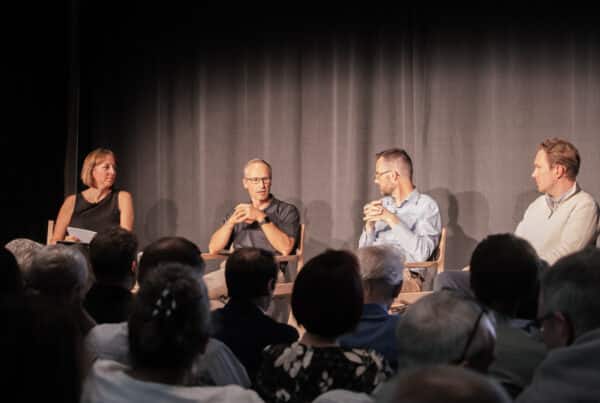
openEHR for clinical innovation: six months of co-creation with University Hospital Basel
Oncologists spend long hours preparing for tumor boards, clinical guidelines sit in clunky PDFs and once patients go home, their health data rarely makes it back to the care team.
These problems came straight from the clinicians at University Hospital Basel, and the Open Innovation Challenge invited bright minds worldwide to solve them.
Five projects went on to be validated in the hospital. Here’s what they built, what they learned and what the challenge taught us about innovating with openEHR.
Recap of the 2026 Open Innovation Challenge with University Hospital Basel – Five Digital Health Solutions and Lessons Learned:
Welcome to the Innovation Catalyst
The Innovation Catalyst powered by DayOne is our open innovation program. Through Open Innovation Challenges, we give hospitals a way to put their clinical problems in front of innovators and validate solutions in their own setting.
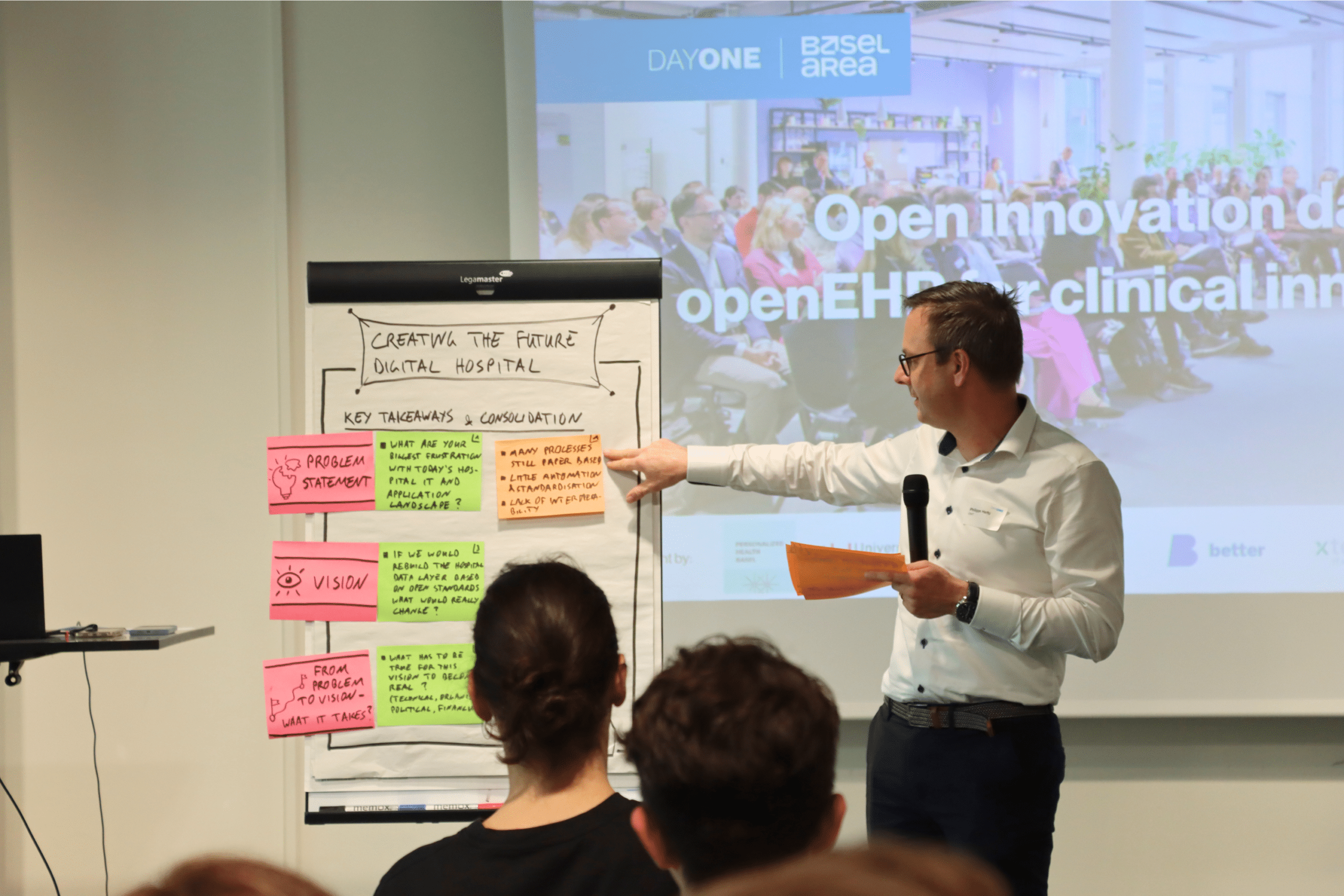
Last year’s challenge was to use openEHR to improve clinical data capture. This year, University Hospital Basel and Personalized Health Basel brought three clinical problems, and innovators had six months to solve them with its clinicians.
It was a joint effort from start to finish, supported by Better, Tieto Caretech, x-tention and OWT.
”The Open Innovation Challenge gave us what is rare in digital health: the chance to work on a real clinical use case, side by side with clinical experts, in a real hospital environment. We look forward to taking Smart SOPs further with our partners, and we warmly recommend the Challenge to every team that wants to test its ideas against clinical reality.
Dr. Michael RoissFounder Treetop Medical
Three questions and 140 answers
This year’s challenge was framed around three use cases:
- Hospital at Home: How can hospital-level monitoring and care follow patients once they recover at home?
- SOPs and clinical decision support: How can clinical guidelines turn into real-time support inside daily workflows?
- Molecular tumor boards: How can teams prepare for tumor boards faster and record their decisions as structured data?
The call was open to anyone with an idea: startups, research teams, hospitals and established companies, in Switzerland and abroad.
More than 140 international participants joined the exploration events, 50 more than the year before.
They submitted 45 proposals. The most promising teams pitched at the selection day, and five went on to validate their solutions with the hospital.
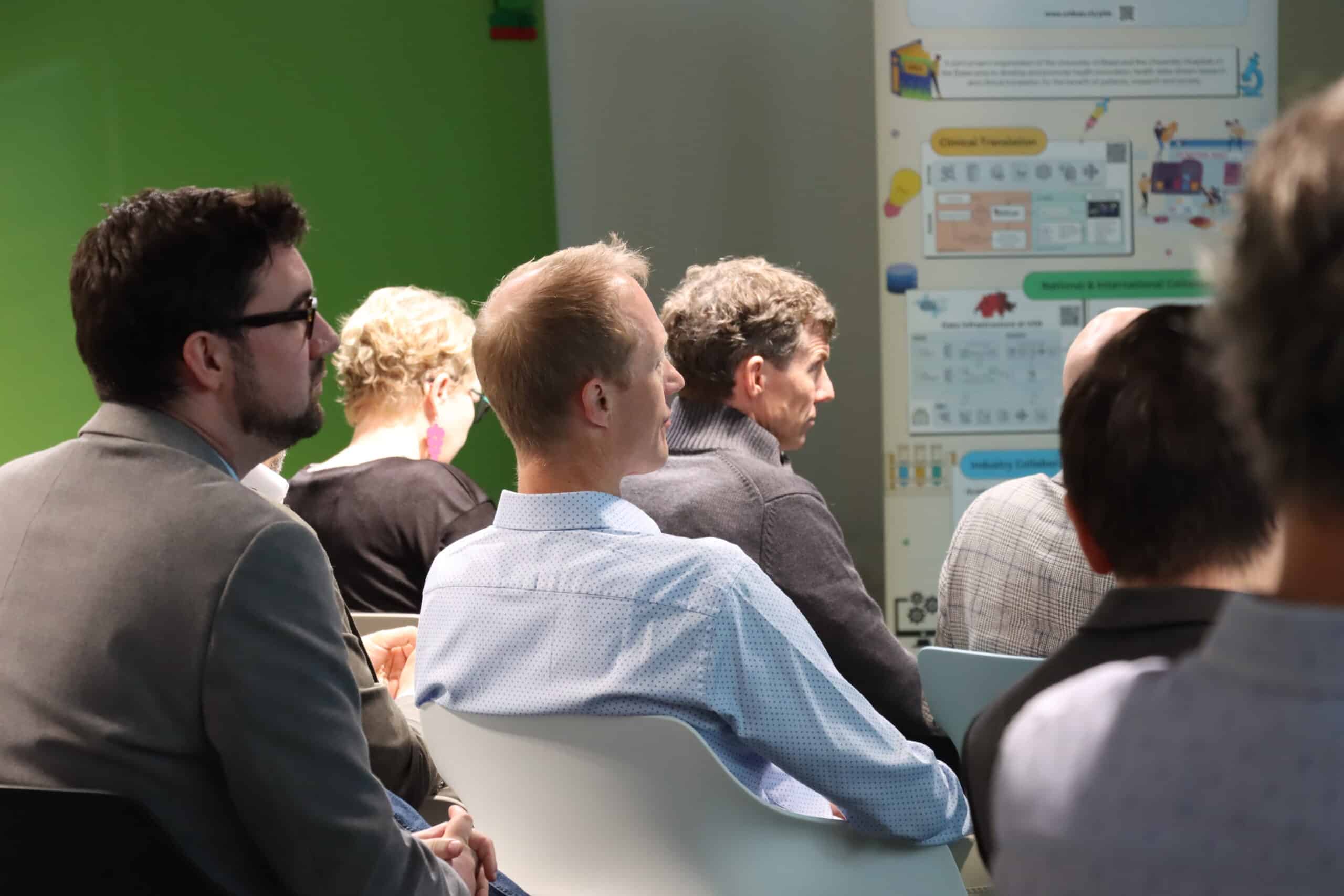
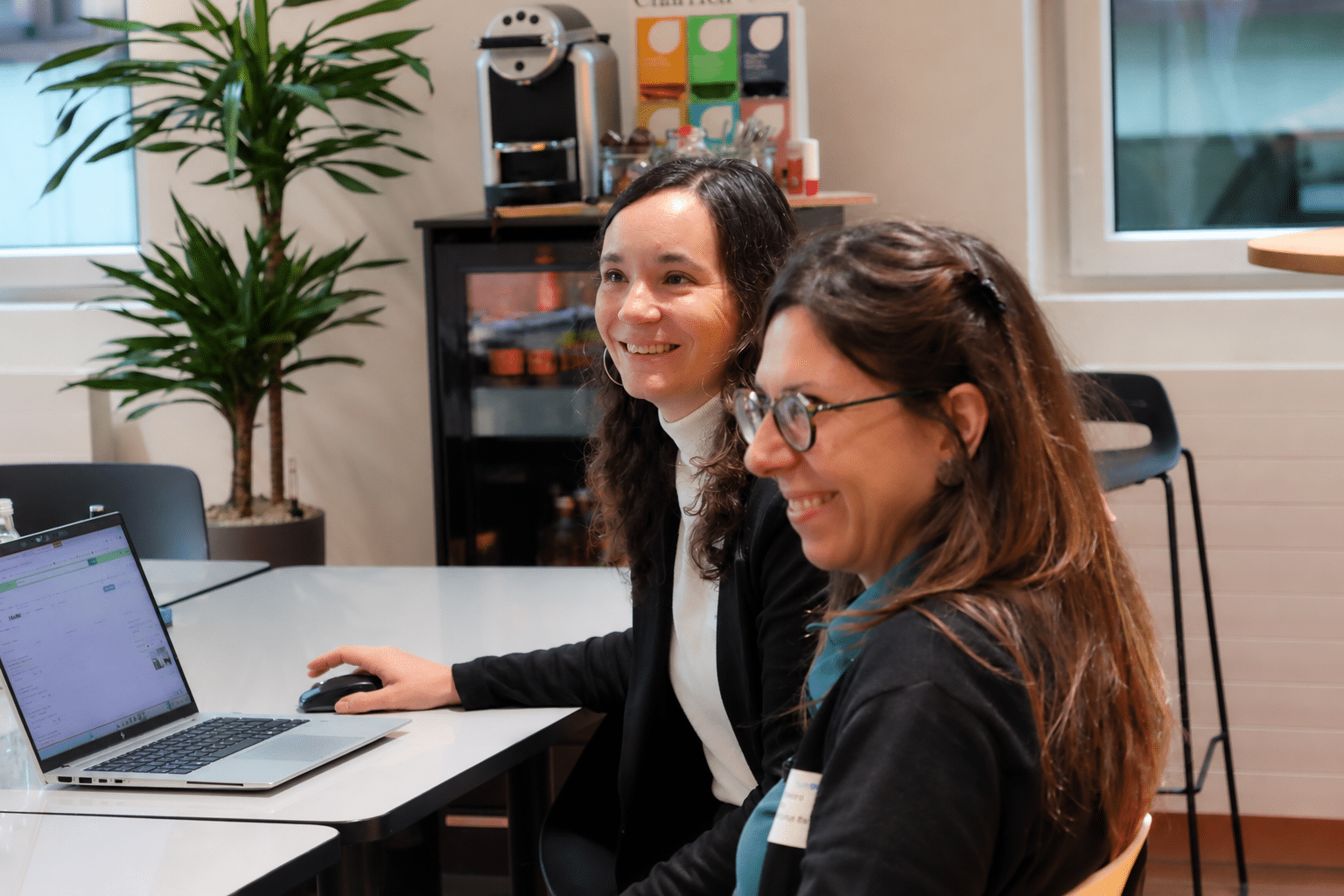
- a dedicated Clinical Champion
- IT and modeling support
- access to the hospital Clinical Data Repository and Better sandbox.
- coaching from DayOne
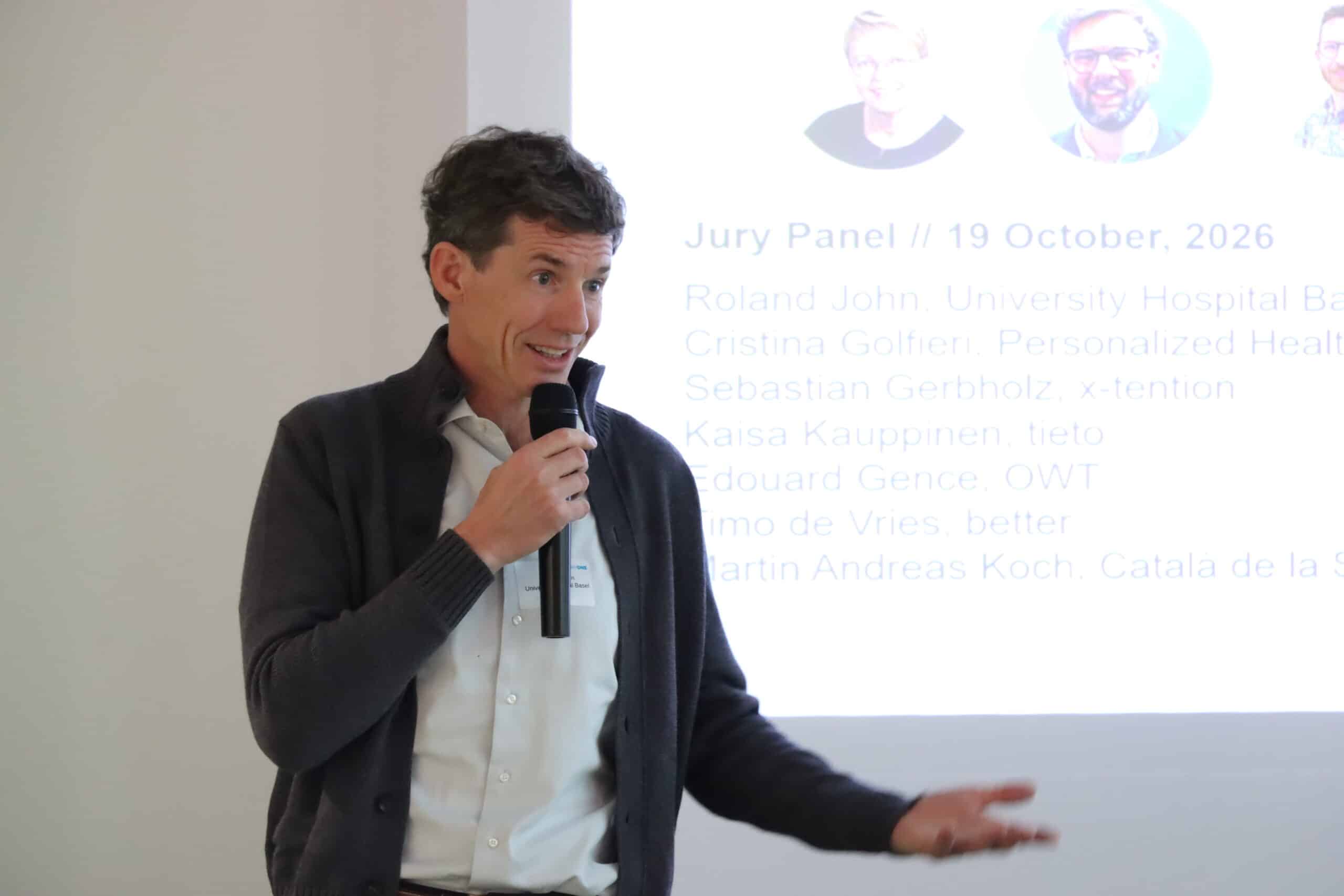
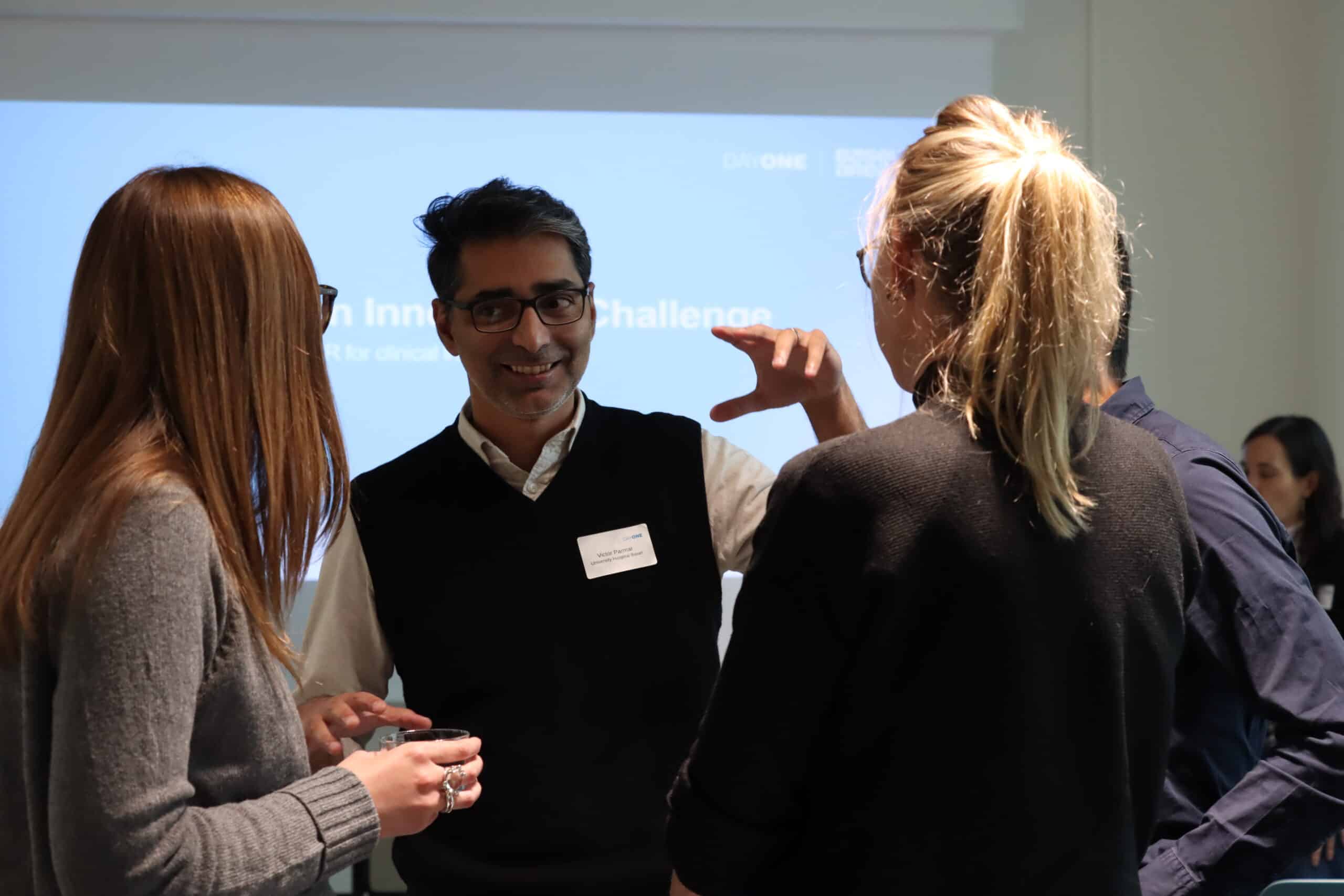
On Demo Day, the conclusion of the program, a jury of hospital, research and industry experts assessed each project on problem-solution fit, validation outcomes, use of openEHR and future potential.
Spotlight on the Challenge projects
Treetop Medical (Demo Day winner, CHF 10,000 award)
Treetop Medical turns hospital SOPs from static documents into digital workflows that support care teams at the right moment. Its workflow pulled three lab values from the openEHR record, graded the case, proposed the next steps and wrote the result back as structured data. Treetop wants to prove the value of its approach and expand to new use cases with more clinicians and institutions.
OncoBoard (DayOne Support package recipient)
OncoBoard brings together the patient data, literature and evidence a molecular tumor board needs, so doctors can focus on interpretation and decisions. The team built a new openEHR archetype that records each tumor board decision and the reasoning behind it, and deployed its solution at University Hospital Basel. OncoBoard plans to propose its archetype to the international openEHR community and prepare for medical device certification.
Virtuosis AI
Virtuosis AI analyzes a patient’s voice during a regular consultation with a neurologist or psychiatrist and detects signs of conditions such as Alzheimer’s disease, along with their severity. At the same time, the voice indicators get mapped to openEHR archetypes. Virtuosis AI is building a more detailed dashboard for specialists and continuing its collaboration with the hospital.
Resmonics
Resmonics helps hospitals prevent infections with a “digital nose,” a sensor that detects when hands and surfaces are disinfected. The team used its data to build a hygiene compliance score in openEHR that compares how many disinfections a room needs with how many actually happened. Resmonics wants to use the same sensor to pick up respiratory and gastrointestinal symptoms and move from audits to real-time risk detection.
Valico
Valico lets stroke patients or their caregivers report home blood pressure readings by voice, and writes each confirmed reading into the openEHR record, tagged as self-reported. The team’s prototype showed the full path, from a spoken reading to a clinical dashboard. Valico wants to add medication adherence, mood and caregiver burden, and find a ward that will act on the data.
Demo Day may have had one winner, but every team left with a solution validated in a real hospital and ready for its next steps. Hospitals interested in exploring any of these solutions are welcome to get in touch.
”It is a truly inspiring program where ideas can be rapidly validated and later turned into solutions that address the needs of clinicians and patients. I really enjoyed the insightful discussions with the USB team. This program creates an environment that makes it possible to co-design with clinicians and demonstrate the power of openEHR to transform healthcare.
András HatosFounder OncoBoard
What we learned for the next Open Innovation Challenge
After six months of webinars, workshops and hands-on validation, we have plenty to take into the next round.
- Clinical innovation starts with real clinical needs. The most promising solutions start with understanding clinical workflows, identifying unmet needs and involving the people who will ultimately use them.
- Interoperability is an important enabler of innovation. Open standards such as openEHR provide a shared foundation on which new applications can be developed, tested and potentially reused across healthcare settings.
- Real-world validation is more than testing a product. Working within a hospital environment helps innovators challenge assumptions, refine their solutions and understand what it takes to move from a promising concept towards clinical adoption.
- Validation looks different for every team. The right process depends on the team’s maturity, the use case and the setting. A startup already used in other hospitals needs a different kind of test than a research team with its first prototype. What every team needs is clinical and technical conversations happening in the same room.
- The best innovation happens across disciplines. Clinicians bring practical experience, startups bring fresh approaches and technology partners bring the infrastructure and expertise needed to make solutions work. The real progress happens where these perspectives meet.
- Innovation should be designed to scale beyond a single hospital. A solution validated in one clinical setting can become the starting point for something much bigger. Open approaches, reusable components and cross-institutional collaboration can help promising innovations travel further.
That conversation reached well beyond Basel, into the international openEHR community, where we shared the challenge’s learnings at EHRCON26, the openEHR international conference in Amsterdam.
Real impact in healthcare takes time, and some of this year’s clinical questions are still open. We look forward to building on what these teams started, and to the next challenge that takes on what’s left.
”The experience exceeded our expectations and laid the foundation for a long-term collaboration.
Lara GervaisCo-founder Virtuosis AI
Ready to transform healthcare?
Rooted in Basel, we aim to transform how clinical innovation is developed, validated and scaled across healthcare systems.
Curious about what open innovation can do for your hospital, your startup or your research?
Visit the Innovation Catalyst page to learn more or express your interest in the next Challenge here.
Or reach out to Yana Yoncheva if you’re ready to join our growing ecosystem and co-create bold digital health solutions that make a real impact.
Interested in collaborating?
If you would like to learn more about the Challenge outcomes and connect with the project teams, we’d be happy to hear from you.
Yana Yoncheva
Manager Open Innovation – DayOne